


Apu Trail vs Inca Trail: Which Trek Should You Choose?
Every traveler dreaming of Machu Picchu has heard of the Inca Trail—that iconic stone path winding through the Andes toward the ancient citadel. But what if there were another route? One less crowded, more authentic, and deeply connected with Andean spirituality? That’s where the Apu Trail comes in.
Every traveler dreaming of Machu Picchu has heard of the Inca Trail — but few know about the stunning alternative: the Apu Trail. Comparing Apu Trail vs Inca Trail helps you understand which adventure truly fits your soul.
So, when it comes to Apu Trail vs Inca Trail, which trek should you choose?
Let’s walk through both routes and find out which one truly speaks to your traveler’s soul.
1. The Inca Trail: The Classic Pilgrimage
The Inca Trail is the most famous trek in South America—and for good reason. It’s a journey through history, where every stone step seems to echo with ancient whispers. The route takes you through cloud forests, archaeological sites like Wiñay Wayna, and finally, to the unforgettable sunrise at Inti Punku, the Sun Gate overlooking Machu Picchu.
But popularity has its price. Only 500 permits are issued daily, and spots sell out months in advance. Crowds can be dense, and the experience—while beautiful—often feels structured and predictable.
“Walking the Inca Trail feels like reading a legend written in stone—but sometimes, legends are meant to be rediscovered from a different path.”
What to expect:
Duration: 4 days / 3 nights.
Difficulty: Moderate.
Altitude: 4,200 m (Dead Woman’s Pass).
Ideal for: History lovers and first-time trekkers who want the traditional route to Machu Picchu.
2. The Apu Trail: The Hidden Soul of the Andes
Far beyond the crowds, the Apu Trail follows the footsteps of the ancient Q’eros people, guardians of Andean wisdom and the spiritual connection with the Apus, or sacred mountains. Unlike the Inca Trail, this route doesn’t lead to Machu Picchu—it leads deep into the heart of living Andean culture.
Each step is accompanied by the sound of wind through ichu grass, the distant bells of grazing llamas, and the stories shared by local guides who grew up in these valleys. This is not just a trek—it’s a spiritual encounter with the Andes themselves.
At Andean Lodges, we created this route to offer travelers a sustainable alternative: high-comfort eco-lodges, warm hospitality, and a chance to walk ancient paths while supporting local communities.
“In the Apu Trail, the mountains aren’t monuments—they are living spirits that guide your journey.”
What to expect:
Duration: 5 days / 4 nights.
Difficulty: Moderate to challenging.
Altitude: up to 5,200 m (near Ausangate).
Ideal for: Adventurous travelers seeking authenticity, solitude, and cultural immersion.
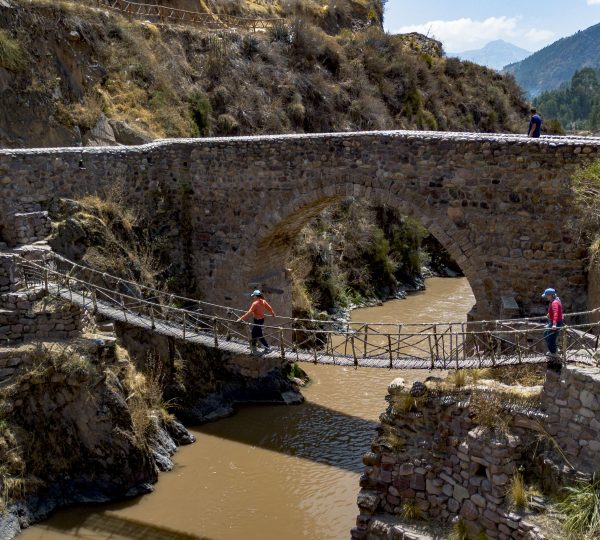
3. Apu Trail vs Inca Trail: The Key Differences
When comparing both routes, the Inca Trail and the Apu Trail may seem similar at first—they both weave through the Andes and carry centuries of history—but the essence of each journey couldn’t be more different.
The Inca Trail leads directly to Machu Picchu, following ancient stone paths built by the Incas themselves. It’s a route full of archaeological sites, misty forests, and that legendary sunrise through the Sun Gate. But it’s also a highly regulated experience with limited daily permits and groups that often fill every corner of the trail. It’s ideal for travelers who want to follow the traditional path and end their journey at one of the world’s greatest wonders.
The Apu Trail, on the other hand, takes you in the opposite direction—toward Ausangate, one of the most sacred mountains in the Andes. Here, you won’t find crowds or checkpoints. Instead, you’ll meet local herders, walk alongside llamas and alpacas, and spend your nights in comfortable eco-lodges designed to protect nature and support local communities. It’s a path less traveled, rich in living traditions and authentic encounters.
While the Inca Trail is a cultural pilgrimage through ancient ruins, the Apu Trail is a spiritual journey through living culture.
The first reaches 4,200 meters above sea level, while the second climbs even higher—up to 5,200 meters, offering dramatic views and a deeper connection with nature.
Where one offers camping under the stars, the other provides warm beds, local meals, and sustainability at every step.
In short, if you dream of standing at the gates of Machu Picchu, the Inca Trail is your path.
But if you long to experience the soul of the Andes, surrounded by silence, color, and ancestral wisdom, then the Apu Trail is waiting for you.
4. Choosing Your Path: The Journey Within
Both trails promise breathtaking views, sacred sites, and unforgettable moments—but their essence differs.
The Inca Trail is about reaching a destination.
The Apu Trail is about becoming part of one.
“Every traveler who walks the Andes leaves a piece of their heart behind—and the Apus always give something back.”
When you compare Apu Trail vs Inca Trail, the real difference is connection — connection with the mountains, with the people, and with yourself. Start your journey with Andean Lodges and discover how well-being, community, and nature come together in the heart of the Andes.
Learn more about other travelers’ experiences on our TripAdvisor page.